81NPM 81NPM
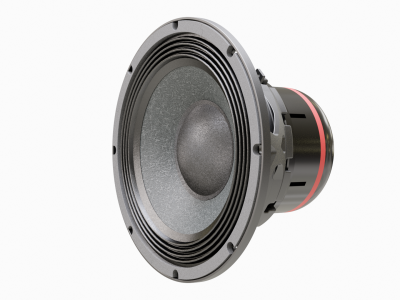
LF Mid-Woofer 8"

81NPM

Code: 81NPMX8-373A

Mid-Range/8inch/Neo/400W/8ohm

Key Features

  • EXTENDED FREQUENCY RESPONSE
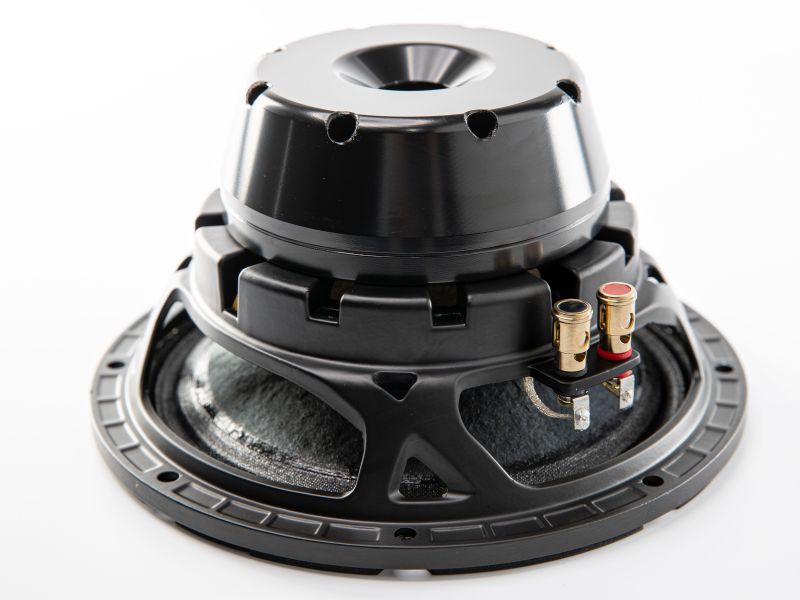
  • 2 demodulation rings powerful motor structure
  • Designed for 2-way and multi-way speaker systems

Quick Specs

Impedance

8 Ω

Program Power

400 W

Sensitivity

93.05 dB

Fs

69.00 Hz

Magnet

Neodymium

Voice Coil

76.2 mm

Design Notes

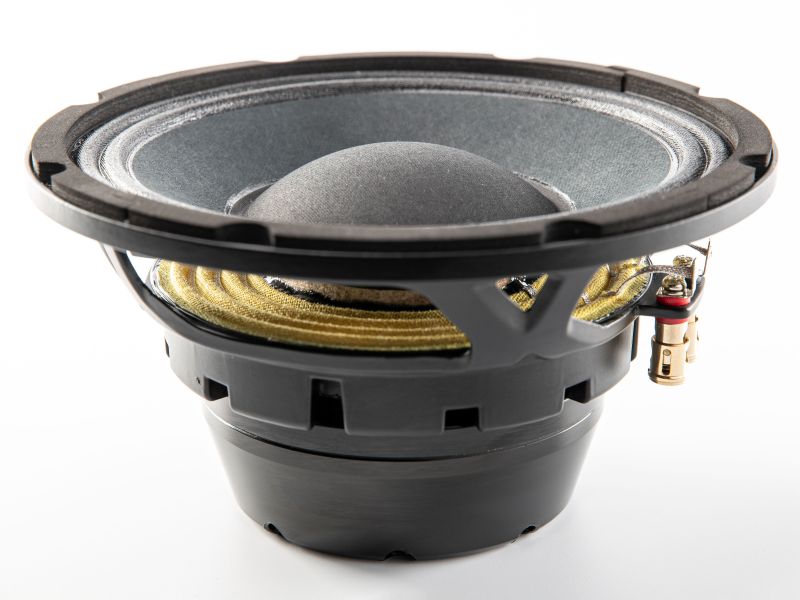
The 81NPM was designed for good reproduction of voice. With an extended low-frequency response, this mid-woofer is highly suitable for two-way and multi-way systems. It’s high power handling capabilities extend the ideal usage as a mid-range driver in line-array systems. The 81NPM uses a lightweight half-pressed paper cone reinforced by our proprietary cone treatment, which also works as weatherization protection. The used high-quality components ensure long-lasting performance even in high powered applications. The chosen material combination provides remarkable strength, high efficiency and sustained output under extreme conditions. 

Power Handling
The voice coil sports Kapton former material capable of withstanding peak temperatures above 300°C, well beyond the thermal requirements of modern audio systems. Former strength provides the ideal transfer of power between the voice coil and the cone assembly and assists in reducing distortion artifacts. By combining this material with state of the art adhesives and our winding voice coil technology, the 81NPM delivers incredibly high performance.

Specifications

General Specs

Nominal Diameter 8"
Rated Impedance 8 Ohm
Magnet Neodymium
Basket Material Aluminum

Power Handling

AES Power 200 W
Continuous Power 400 W
Peak Power 800 W

Voice Coil

Diameter 76.2 mm
Winding Wire CCAW
Former Glass Fiber
Winding Height 18.6 mm

T/S Parameters

Resonant Frequency (Fs) 69.00 Hz
Re 7.40 \u2126
Qes 0.290
Qms 4.84
Qts 0.280
Vas 10.30 liters
Sd 219.00 cm\u00B2
Mms 34.20 grams
Rms 3.06
Cms 0.1560
Bl 19.30 T\u00B7m
Le 0.750 mH
Sensitivity 93.05 dB

Design Details

Surround Material fabric
Cone/Dome Material Paper GF
Spider Nomex
T-Plate 10.5 mm
Xmax (peak) 4.05 mm
Xmech 14.55 mm
Overall Diameter 210.00 mm
Bolt Circle Diameter 195.50 mm
Baffle Cutout Dia. 186.88 mm
Mounting Holes 8
Depth (flange to rear) 101.30 mm
Net Weight 3.20 kg

Ordering Codes

Product Code 81NPMX8-373A

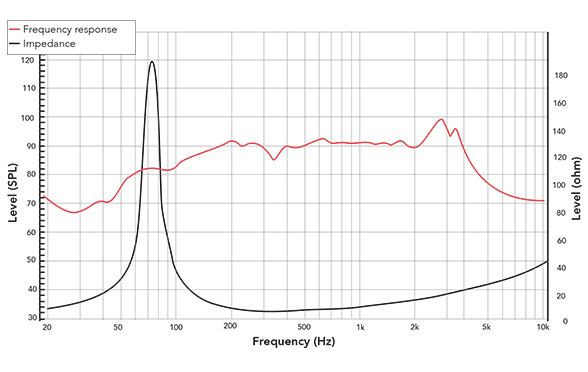
Frequency Response & Impedance

Frequency response of 81NPM

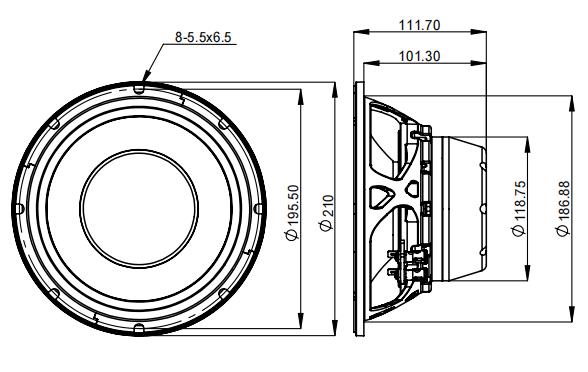
2D Drawing

2D drawing of 81NPM

Technical Summary

This driver is suitable for both vented (mid-woofer) and sealed (midrange) enclosure configurations depending on the system architecture. In bass reflex enclosures, recommended net internal volumes range from 10 to 14 liters with tuning frequencies between 54 and 71 Hz. Smaller volumes (10–12 liters tuned to 62–71 Hz) prioritize mid-bass output and cabinet compactness for portable 2-way systems, while 14 liters tuned to 54 Hz extends the usable low-frequency response to approximately 46 Hz (–3 dB) for stand-alone applications without dedicated subwoofers. Port velocities remain very low (9–12 m/s) across all vented alignments. In sealed enclosures for midrange duty, the driver performs in very compact net internal volumes of 0.9 to 1.9 liters, producing system resonances between 174 and 246 Hz. Smaller sealed volumes (0.9–1.3 liters, Qtc 0.85–1.0) maximize acoustic output in the midrange passband for line array modules and horn-loaded midrange systems, while 1.9 liters yields a Butterworth-class response (Qtc 0.707) with maximally flat amplitude for accuracy-focused applications.
The driver requires active DSP crossover management in both configurations. In vented mid-woofer use, a high-pass filter in the range of 44–61 Hz (24 dB/octave Linkwitz-Riley) is recommended depending on enclosure tuning, with a typical crossover to a high-frequency driver at 1.2–3 kHz. In sealed midrange use, a high-pass filter in the range of 170–350 Hz is recommended depending on enclosure volume and system architecture. In both cases, appropriate limiting is required to manage thermal and mechanical stress during sustained operation.
This driver is particularly effective in professional touring line arrays, compact 2-way portable loudspeakers, multi-way point-source cabinets, and installation systems where versatility across mid-woofer and midrange roles, high power handling, low distortion, and environmental durability are priorities. The neodymium motor with demodulation rings, lightweight cone assembly, and weatherized treatment provide consistent performance in demanding touring and outdoor environments.

Enclosure Recommendations

ENCLOSURE RECOMMENDATIONS: 81NPMX8-373A
Driver: 81NPMX8-373A (81NPM) — 8" Mid-Woofer / Midrange
Key T/S: Fs=69Hz, Qts=0.28, Vas=10.3L, Sens=93dB 1W/1m
Power: AES 200W / Cont 400W / Peak 800W
Xmax=4.05mm, Sd=219cm², Bl=19.3T·m, Re=7.4Ω, Mms=34.2g
Voice Coil: 3" CCAW on glass fiber former (18.6mm winding height)
Magnet: Neodymium | Cone: Half-pressed paper (weatherized treatment)
Surround: Fabric | Spider: Nomex | Basket: Aluminum
Motor: 2 demodulation rings, neodymium
NOTE: This driver's very low Qts (0.28) and strong neodymium motor
(Bl=19.3 T·m) with demodulation rings make it highly suited to BOTH
vented mid-woofer and sealed midrange applications. Compared to the
81NPMX8-263 variant, this model has a stronger motor, lighter moving
mass (34.2g vs 40.5g), lower Qts (0.28 vs 0.33), and reduced Xmax
(4.05mm vs 6mm). This shifts the design toward tighter cone control
and lower distortion at the expense of maximum excursion-limited output.
Six enclosure alignments are provided below — three vented (mid-woofer
use) and three sealed (midrange use).
  MID-WOOFER APPLICATION — Bass Reflex (Vented)
Use case: 2-way and multi-way systems where the 81NPM handles the
low-frequency and lower-midrange content, typically crossed over to
a compression driver or tweeter at 1.2–3 kHz.
PORT RECOMMENDATION: Round port (65mm diameter) — standard for compact
8" bass reflex enclosures. Port velocities are very low across all
alignments (9–12 m/s), well within limits for all professional
applications including studio monitors. No flaring required, though
recommended for best practice.
  a) VENTED — High SPL
     Net Volume: 10 liters
     Tuning (Fb): 71 Hz
     Est. -3dB: 65 Hz
     HP Filter: 61 Hz (24dB/oct LR recommended)
     Round Port: 65mm dia × 149mm long
     Slot Port: 156mm W × 40mm H × 278mm L
     Port Velocity: 11.9 m/s
     Notes: Compact alignment with strong mid-bass control.
     The very low Qts provides tight, well-damped low-frequency
     response with excellent transient behavior. Ideal for compact
     2-way tops, stage monitors, and portable systems where
     controlled bass and vocal clarity are priorities.
  b) VENTED — Balanced Response
     Net Volume: 12 liters
     Tuning (Fb): 62 Hz
     Est. -3dB: 53 Hz
     HP Filter: 52 Hz (24dB/oct LR recommended)
     Round Port: 65mm dia × 167mm long
     Slot Port: 156mm W × 40mm H × 311mm L
     Port Velocity: 10.4 m/s
     Notes: General-purpose alignment with even response through
     the bass region. Good balance between low-frequency extension
     and cabinet size. Well-suited for most 2-way PA tops, multi-way
     systems, and installation loudspeakers.
  c) VENTED — Extended Low Frequency
     Net Volume: 14 liters
     Tuning (Fb): 54 Hz
     Est. -3dB: 46 Hz
     HP Filter: 44 Hz (24dB/oct LR recommended)
     Round Port: 65mm dia × 195mm long
     Slot Port: 156mm W × 40mm H × 363mm L
     Port Velocity: 9.1 m/s
     Notes: Maximum low-frequency extension, reaching well into
     the sub-bass region. The strong motor maintains cone control
     even at these lower tuning frequencies. Best for stand-alone
     2-way systems without dedicated subwoofers, or applications
     where deep bass extension is a requirement. Requires proper
     high-pass protection below tuning.
  MIDRANGE APPLICATION — Sealed
Use case: Line array midrange sections, coaxial cabinets, horn-loaded
midrange systems, or dedicated mid-high enclosures where the 81NPM
handles the midrange band (typically 250–3000 Hz or narrower), with
bass duties handled by separate woofer/subwoofer sections.
  d) SEALED — High SPL (Qtc ≈ 1.0)
     Net Volume: 0.9 liters
     System Resonance (fc): 246 Hz
     Qtc: 1.0
     Response: Broad gentle lift near fc, maximum midrange output
     Crossover HP: 250–350 Hz (24dB/oct LR recommended)
     Notes: Very compact sealed chamber for maximum acoustic
     output in the midrange passband. The elevated Qtc provides
     a gentle broad peak near system resonance that can be
     equalized flat via DSP or used as a passband sensitivity
     boost. Ideal for high-SPL touring line arrays and horn-loaded
     midrange systems where output per driver is the primary
     requirement. The very low Qts (0.28) keeps the resonance
     peak well-controlled even at Qtc=1.0.
  e) SEALED — Balanced (Qtc ≈ 0.85)
     Net Volume: 1.3 liters
     System Resonance (fc): 209 Hz
     Qtc: 0.85
     Response: Slightly warm, smooth transition through resonance
     Crossover HP: 200–280 Hz (24dB/oct LR recommended)
     Notes: Good compromise between midrange output and response
     flatness. The slight warmth near resonance is easily managed
     with DSP. Suitable for most professional midrange applications
     including line arrays, point-source cabinets, and stage monitors.
  f) SEALED — Butterworth (Qtc ≈ 0.707)
     Net Volume: 1.9 liters
     System Resonance (fc): 174 Hz
     Qtc: 0.707
     Response: Maximally flat amplitude, textbook Butterworth alignment
     Crossover HP: 170–220 Hz (24dB/oct LR recommended)
     Notes: Flattest possible sealed response with lowest system
     resonance. Allows a lower crossover frequency if needed,
     providing extended lower-midrange coverage. Best for
     applications prioritizing accuracy, smooth crossover
     integration, and minimal DSP correction.
THERMAL NOTE: The neodymium motor and aluminum basket provide efficient
thermal dissipation. The 3" CCAW voice coil on glass fiber former
supports sustained high-power operation. For sealed midrange chambers
(especially ≤1.0L), ensure adequate ventilation or thermal coupling
between the motor and the enclosure structure. The hero text notes
Kapton-grade thermal tolerance (>300°C peak) on the former material.
DESIGN NOTE: The 2 demodulation rings reduce harmonic and
intermodulation distortion — particularly beneficial in midrange
applications where distortion artifacts are more audible. The
weatherized cone treatment provides environmental protection for
outdoor and semi-permanent installation use.
COMPARISON vs 81NPMX8-263:
  Parameter        263         373A        Implication
  Qts              0.33        0.28        373A: tighter motor control
  Bl               16.7 T·m    19.3 T·m    373A: stronger motor force
  Mms              40.5g       34.2g       373A: lighter, faster response
  Xmax             6.0mm       4.05mm      263: more excursion headroom
  Vented volumes   9–12L       10–14L      373A: slightly larger boxes
  Sealed volumes   1.3–2.9L    0.9–1.9L    373A: more compact midrange
  Port velocity    15–20 m/s   9–12 m/s    373A: lower (less Xmax)
The 373A variant favors midrange clarity and low distortion with its
stronger motor and lighter cone, while the 263 offers more excursion
capability for higher-SPL mid-woofer applications.
--- AI SUMMARY (copy/paste ready) ---
The 81NPMX8-373A is an 8-inch neodymium mid-woofer designed for professional two-way, multi-way, and line array systems requiring high power handling (200 W AES / 400 W continuous), tight motor control, and low-distortion reproduction. It features a 3-inch CCAW voice coil on a glass fiber former with Kapton-grade thermal tolerance, a weatherized half-pressed paper cone with fabric surround, and a neodymium motor with 2 demodulation rings for reduced harmonic and intermodulation distortion. With a sensitivity of 93 dB (1W/1m) and a very low Qts of 0.28, the motor and suspension are optimized to maintain consistent performance at high drive levels, with controlled excursion and reduced thermal compression during long-term operation.

Frequently Asked Questions

  • - EXTENDED FREQUENCY RESPONSE
  • - 2 demodulation rings powerful motor structure
  • - Designed for 2-way and multi-way speaker systems
ENCLOSURE RECOMMENDATIONS: 81NPMX8-373A
Driver: 81NPMX8-373A (81NPM) — 8" Mid-Woofer / Midrange
Key T/S: Fs=69Hz, Qts=0.28, Vas=10.3L, Sens=93dB 1W/1m
Power: AES 200W / Cont 400W / Peak 800W
Xmax=4.05mm, Sd=219cm², Bl=19.3T·m, Re=7.4Ω, Mms=34.2g
Voice Coil: 3" CCAW on glass fiber former (18.6mm winding height)
Magnet: Neodymium | Cone: Half-pressed paper (weatherized treatment)
Surround: Fabric | Spider: Nomex | Basket: Aluminum
Motor: 2 demodulation rings, neodymium
NOTE: This driver's very low Qts (0.28) and strong neodymium motor
(Bl=19.3 T·m) with demodulation rings make it highly suited to BOTH
vented mid-woofer and sealed midrange applications. Compared to the
81NPMX8-263 variant, this model has a stronger motor, lighter moving
mass (34.2g vs 40.5g), lower Qts (0.28 vs 0.33), and reduced Xmax
(4.05mm vs 6mm). This shifts the design toward tighter cone control
and lower distortion at the expense of maximum excursion-limited output.
Six enclosure alignments are provided below — three vented (mid-woofer
use) and three sealed (midrange use).
  MID-WOOFER APPLICATION — Bass Reflex (Vented)
Use case: 2-way and multi-way systems where the 81NPM handles the
low-frequency and lower-midrange content, typically crossed over to
a compression driver or tweeter at 1.2–3 kHz.
PORT RECOMMENDATION: Round port (65mm diameter) — standard for compact
8" bass reflex enclosures. Port velocities are very low across all
alignments (9–12 m/s), well within limits for all professional
application...
This driver is suitable for both vented (mid-woofer) and sealed (midrange) enclosure configurations depending on the system architecture. In bass reflex enclosures, recommended net internal volumes range from 10 to 14 liters with tuning frequencies between 54 and 71 Hz. Smaller volumes (10–12 liters tuned to 62–71 Hz) prioritize mid-bass output and cabinet compactness for portable 2-way systems, while 14 liters tuned to 54 Hz extends the usable low-frequency response to approximately 46 Hz (–3 dB) for stand-alone applications without dedicated subwoofers. Port velocities remain very low (9–12 m/s) across all vented alignments. In sealed enclosures for midrange duty, the driver performs in very compact net internal volumes of 0.9 to 1.9 liters, producing system resonances between 174 and 246 Hz. Smaller sealed volumes (0.9–1.3 liters, Qtc 0.85–1.0) maximize acoustic output in the midrange passband for line array modules and horn-loaded midrange systems, while 1.9 liters yields a Butterworth-class response (Qtc 0.707) with maximally flat amplitude for accuracy-focused applications. The driver requires active DSP crossover management in both configurations. In vented mid-woofer use, a high-pass filter in the range of 44–61 Hz (24 dB/octave Linkwitz-Riley) is recommended depending on enclosure tuning, with a typical crossover to a high-frequency driver at 1.2–3 kHz. In sealed midrange use, a high-pass filter in the range of 170–350 Hz is recommended depending on enclosure volume and system architecture. In both cases, appropriate limiting is required to manage thermal and mechanical stress during sustained operation. This driver is particularly effective in professional touring line arrays, compact 2-way portable loudspeakers, multi-way point-source cabinets, and installation systems where versatility across mid-woofer and midrange roles, high power handling, low distortion, and environmental durability are priorities. The neodymium motor with demodulation rings, lightweight cone assembly, and weatherized treatment provide consistent performance in demanding touring and outdoor environments.
AES Power: 200 W, Continuous: 400 W, Peak: 800 W. Sensitivity: 93.05 dB (1W/1m).
Related Products