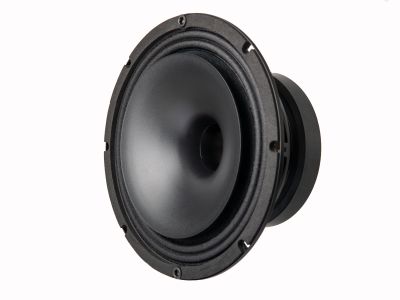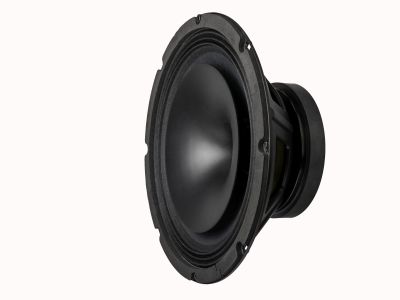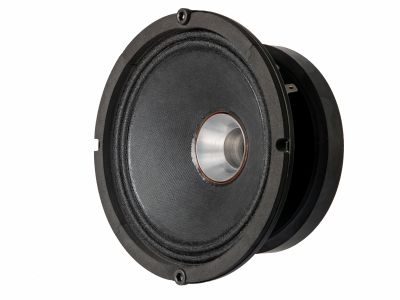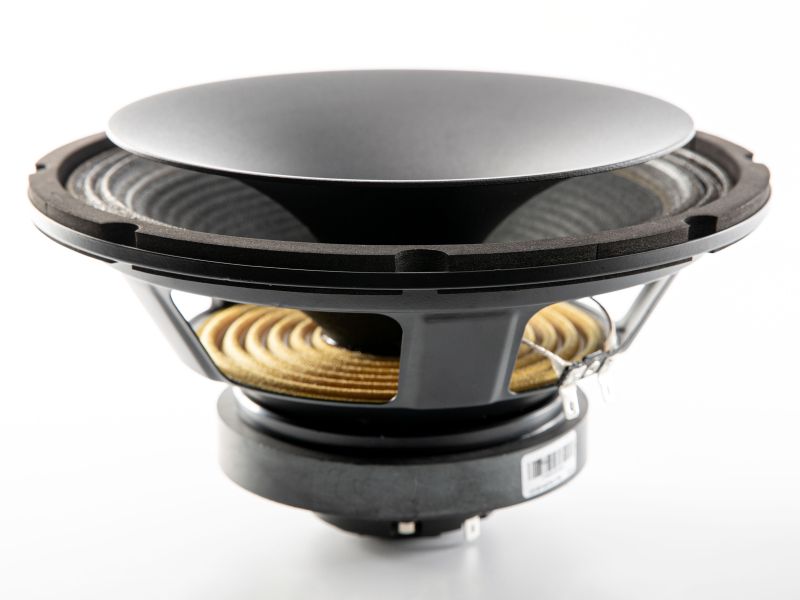
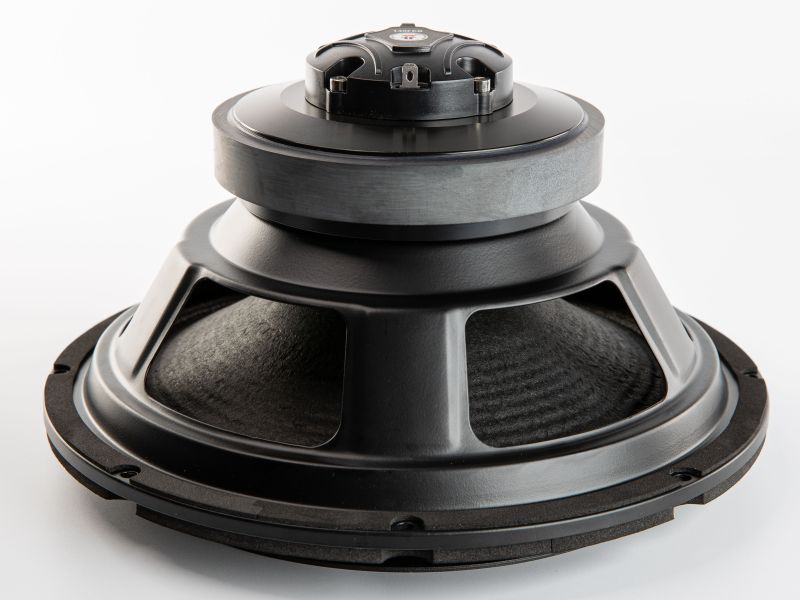
Coax
Coaxial
10"
CX10F140F
Code: CX10F-140FX8-375B
Coaxial:LF-10"/Ferrite/Paper/150W/8ohm,HF-1.4"/Ferrite/Polmyer/30W/8ohm
Key Features
- LF and HF integrated ferrite-neodymium magnetic circuit
- Aluminum symmetrical horn
- Good off-axes frequency response
Quick Specs
Impedance
8 Ω
Program Power
LF: 400 W / HF: 60 W
Sensitivity
95.03 dB
Magnet
Hybride
Voice Coil
LF: 50.8 mm / HF: 35.6 mm
Design Notes
The CX10F-140F is a high efficiency, (93.5dB 1watt / 1 meter) 8-inch coaxial speaker with very linear frequency response characteristics and high power handling capability. The mid-woofer utilizes REDCATT developed paper pulp cone that has proven its performance in many ours successful designs. The HF section was designed around our most successful dome assembly as used in 140FCD and has integrated symmetrical aluminum horn. The combination of used materials with our state of the art quality production yields in well performing driver even in the most demanding and extreme weather conditions.
Magnetic circuit design
REDCATT engineers have developed ferrite-neodymium based magnetic circuit, capable of delivering the highest level of performance in a small form factor. The combination of ferrite and neodymium delivers an excellent magnetic performance. The magnetic circuit design is optimized to generate the minimum amount of flux modulation, providing exceptional stability. Aluminum demodulation ring is assembled in the HF section.
Magnetic circuit design
REDCATT engineers have developed ferrite-neodymium based magnetic circuit, capable of delivering the highest level of performance in a small form factor. The combination of ferrite and neodymium delivers an excellent magnetic performance. The magnetic circuit design is optimized to generate the minimum amount of flux modulation, providing exceptional stability. Aluminum demodulation ring is assembled in the HF section.
Specifications
General Specs
Nominal Diameter
10"
Rated Impedance
8 Ohm
Magnet
Hybride
Basket Material
Steel
Power Handling
AES Power
LF: 200 W / HF: 30 W
Continuous Power
LF: 400 W / HF: 60 W
Peak Power
LF: 800 W / HF: 120 W
Voice Coil
Diameter
LF: 50.8 mm / HF: 35.6 mm
Winding Wire
CCAW
Former
Glass Fiber/kapton
Winding Height
12/2.5 mm
T/S Parameters
Qes
0.750
Qms
5.03
Qts
0.650
Vas
24.20 liters
Sd
346.40 cm\u00B2
Mms
31.20 grams
Rms
2.92
Cms
0.1400
Bl
10.36 T\u00B7m
Le
0.490 mH
Sensitivity
95.03 dB
Design Details
Surround Material
fabric/PEN
Cone/Dome Material
Paper CF/PEN
Spider
Nomex
T-Plate
8 mm
Xmax (peak)
2 mm
Xmech
10 mm
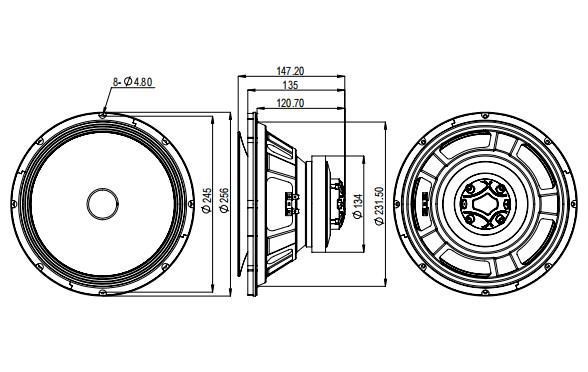
Overall Diameter
256.00 mm
Bolt Circle Diameter
245.00 mm
Baffle Cutout Dia.
231.50 mm
Mounting Holes
8
Depth (flange to rear)
120.70 mm
Net Weight
3.10 kg
Ordering Codes
Product Code
CX10F-140FX8-375B
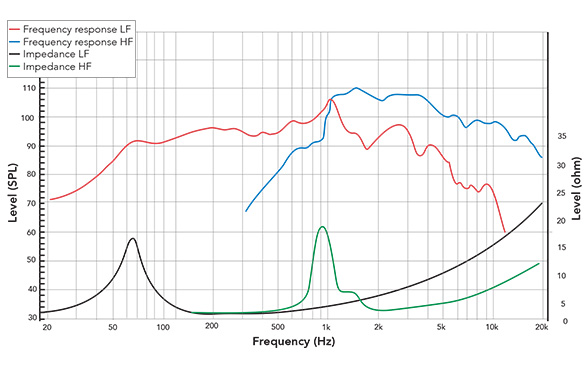
Frequency Response & Impedance
2D Drawing
Enclosure Recommendations
CX10F-140FX8-375B — COAXIAL DRIVER ENCLOSURE & SYSTEM ANALYSIS
DRIVER IDENTITY
Code : CX10F-140FX8-375B
Description : 10" LF Coaxial / 1.4" HF Coaxial — Ferrite-Neodymium Hybrid
LF Section : 10" / Ferrite+Neodymium / Carbon Fiber-Reinforced Paper / 200 W AES / 8 Ω
HF Section : 1.4" / Ferrite+Neodymium / PEN Dome / 30 W AES / 8 Ω
Nominal Imp : 8 Ω (both sections)
Category : Coaxial
Brand : REDCATT
Method : Broken-in
Note : Description field states 150 W LF; AES Power field (200 W) used as authoritative.
THIELE-SMALL PARAMETERS
--- LF SECTION ---
Fs : 75 Hz
Re : 5.5 Ω
Qes : 0.75
Qms : 5.03
Qts : 0.65
Qts verify : 1 / (1/0.75 + 1/5.03) = 1 / (1.333 + 0.199) = 1/1.532 = 0.653 ≈ 0.65 ✓
Vas : 24.2 L
Sd : 346.4 cm²
Sensitivity : 95.03 dB (2.83 V / 1 m)
Mms : 31.2 g
Rms : 2.92 N·s/m
Cms : 0.14 mm/N
Bl : 10.36 T·m
Le : 0.49 mH
Lm : 93.4 dB (1 W / 1 m, 8 Ω)
Xmax : 2.0 mm (one-way linear)
Xmech : 10.0 mm (one-way mechanical)
Xprot : not provided in catalog data
AES Power : 200 W (LF)
Cont. Power : 400 W (LF)
Peak Power : 800 W (LF)
VC Diameter : 50.8 mm
VC Wire : CCAW (copper-clad aluminum)
Former : Glass Fiber
L-Winding : 12 mm (→ Xmax check: (12 − 8 T-plate) / 2 = 2.0 mm ✓)
Cone : Carbon fiber-reinforced paper pulp (Paper CF)
Spider : Nomex
T-Plate : 8 mm
Surround : Fabric
--- HF SECTION ---
Fs : 1,000 Hz
Re : 5.5 Ω
Lm : 105 dB (1 W / 1 m, 8 Ω)
AES Power : 30 W (HF)
Cont. Power : 60 W (HF)
Peak Power : 120 W (HF)
VC Diameter : 35.6 mm
Former : Kapton
Dome : PEN (polyethylene naphthalate)
Surround : PEN
Waveguide : Integrated symmetrical aluminum horn (rotationally symmetric — identical H/V coverage)
Features : Aluminum demodulation ring (Faraday ring); hybrid ferrite-neodymium shared magnetic circuit
PHYSICAL DIMENSIONS
Overall Diameter : 256 mm
Bolt Circle Diameter : 245 mm
Baffle Cutout Diameter : 231.5 mm
Mounting Holes : 8
Depth : 120.7 mm
NET Weight : 3.1 kg
Packed Weight : 3.7 kg
Magnet System : Hybrid ferrite-neodymium (combined LF + HF magnetic circuit)
Basket : Steel
DERIVED VALUES
Vd (LF) : Sd × Xmax = 346.4 cm² × 0.2 cm = 69.28 cm³
→ LARGEST Vd of all drivers across both full-range and coaxial families
(CX8: 42.76 cm³; CX6: 28.2 cm³; 5FRX8: 18.0 cm³)
Sensitivity Check (LF):
Expected (2.83V) = Lm + 10·log₁₀(8.009 / Re)
= 93.4 + 10·log₁₀(8.009 / 5.5)
= 93.4 + 10·log₁₀(1.456)
= 93.4 + 1.63 = 95.03 dB
CSV Sensitivity : 95.03 dB
Discrepancy : 0.00 dB ✓ (perfect consistency — 8 Ω driver confirmed)
Max SPL (LF) : Lm + 10·log₁₀(200 W) = 93.4 + 23.01 = 116.4 dB
Max SPL (HF) : 105 + 10·log₁₀(30 W) = 105 + 14.77 = 119.8 dB
HF/LF Mismatch : 105 − 93.4 = 11.6 dB (HF section requires 11.6 dB attenuation to match LF)
→ Largest mismatch in coaxial family (CX8: 10.56 dB; CX6: 7.2 dB)
→ Trend: mismatch grows with LF cone size as HF assembly is common across family
f_Le (LF) : Re / (2π × Le) = 5.5 / (2π × 0.00049) = 5.5 / 0.003079 = 1,786 Hz
f_beam (LF) : c / (π × r_cone); r_cone = √(Sd / π) = √(346.4 / 3.14159) = √110.26 = 10.50 cm
f_beam = 34,400 / (π × 10.50) = 34,400 / 32.99 = 1,043 Hz
→ Lowest f_beam in coaxial family (CX8: 1,327 Hz; CX6: 1,635 Hz)
f_array : c / (2 × OD) = 34,400 / (2 × 25.6 cm) = 34,400 / 51.2 = 672 Hz (OD = 256 mm)
→ Lowest f_array in both families (CX8: 830 Hz; CX6: 1,040 Hz)
Zobel Network (LF):
Rz = Re : 5.5 Ω
Cz = Le / Re² : 0.49 × 10⁻³ / (5.5²) = 0.49 × 10⁻³ / 30.25 = 16.2 μF
ENCLOSURE RECOMMENDATIONS — LF SECTION
Qts = 0.65 → SEALED PRIMARY (Qts in 0.50–0.70 sealed-preferred range)
Note: Sealed Butterworth (Qtc = 0.707) requires Vb = 132 L — impractical for any PA application.
Higher Qtc alignments give practical cabinet sizes; Qtc = 1.00–1.20 is the recommended
target range. For subwoofer-assisted systems Qtc = 1.50 at 5.6 L is viable.
--- SEALED ALIGNMENTS ---
Qtc Vb (L) fc (Hz) f−3dB (Hz) Notes
0.707 132.2 81.5 81.5 Butterworth — impractical; shown for reference
0.85 34.1 98.1 84.3 Extended bass; large stand-alone cabinet
1.00 17.7 115.4 90.7 Practical optimum for full-range PA use
1.20 10.1 138.5 101.9 Compact column cabinet; preferred with sub
1.50 5.6 173.1 121.1 Subwoofer-assisted systems only (sub XO ≥ 130 Hz)
Calculations:
Vb = Vas / ((Qtc/Qts)² − 1)
fc = Fs × (Qtc/Qts)
f-3dB: u = [−(2 − 1/Qtc²) + √((2 − 1/Qtc²)² + 4)] / 2; Ω = √u; f-3dB = Ω × fc
Example (Qtc = 1.00):
Vb = 24.2 / ((1.00/0.65)² − 1) = 24.2 / (2.367 − 1) = 24.2 / 1.367 = 17.7 L
fc = 75 × (1.00/0.65) = 115.4 Hz
u = [−1 + √(1 + 4)] / 2 = [−1 + 2.236] / 2 = 0.618; Ω = 0.786; f-3dB = 0.786 × 115.4 = 90.7 Hz
--- VENTED ALIGNMENTS (secondary) — 75 mm round port ---
Port area : Ap = π × (37.5 mm)² = 4,418 mm² = 44.18 cm²
End corr. : flanged end 0.85 × 37.5 = 31.9 mm; unflanged end 0.61 × 37.5 = 22.9 mm; total 54.8 mm
Port formula : Leff = (Ap × c²) / (4π² × Fb² × Vb); c = 344 m/s; 4π² = 39.478
Velocity : v_peak = Vd × 2π × Fb / Ap (SI units)
Vb (L) Fb (Hz) Leff (mm) L_phys (mm) v_peak (m/s) Limit check
20 55 218.9 164 5.42 ≤ 17 m/s hi-fi ✓
30 45 218.0 163 4.43 ≤ 17 m/s hi-fi ✓
40 38 229.2 174 3.75 ≤ 17 m/s hi-fi ✓
Near-constant port length pattern: physical length spans 163–174 mm (11 mm range) across three
tuning points — Helmholtz equation's increasing Vb and decreasing Fb cancel, as observed in
previous drivers in this family. All port velocities are comfortably low given the large
port area relative to Vd.
CROSSOVER AND SYSTEM INTEGRATION — HF/LF COAXIAL
HF minimum operating frequency (horn-loaded, est. from HF Fs = 1,000 Hz) : ~1,100–1,200 Hz
LF f_beam onset (cone directivity narrows): 1,043 Hz
LF f_Le (inductance rolloff begins): 1,786 Hz
CRITICAL — NARROW CROSSOVER WINDOW:
f_beam_LF (1,043 Hz) is BELOW the HF horn's practical lower limit (~1,100–1,200 Hz).
No crossover point simultaneously satisfies both constraints.
Recommended compromise crossover: 1,200–1,500 Hz.
At 1,200 Hz : LF cone beaming is active; coaxial co-location of LF and HF drivers
moderates the practical off-axis impact versus a displaced two-way system.
At 1,500 Hz : LF beaming more pronounced; HF section is well loaded and stable.
Crossover slope: minimum LR4 (24 dB/oct Linkwitz-Riley) strongly recommended.
Phase alignment: coaxial geometry provides acoustic co-location; physical depth offset
between LF and HF acoustic centres should be compensated in DSP/active
crossover if delay precision is required.
HF/LF Level Matching:
Mismatch = 11.6 dB (largest in coaxial family; increasing trend CX6 → CX8 → CX10)
Passive L-pad (HF, 5.5 Ω nominal): series ≈ 2.7 Ω, shunt ≈ 1.5 Ω gives ~11 dB
attenuation — fine-tune by measurement.
Active / DSP: −11.6 dB gain trim on HF amplifier channel (preferred for accuracy).
Note: L-pad alters HF section Q and damping; active/DSP approach is recommended where
precise response shaping is required.
Column Array Directivity — Three Regimes (CX10 in vertical line array):
< 672 Hz : Array-controlled directivity (determined by inter-driver spacing, column
length, and driver count)
672–1,500 Hz : Transition zone — f_array to crossover. LF cone beaming onset (1,043 Hz)
falls INSIDE this zone, creating a complex directivity region that requires
careful modelling or measurement. System designers must not assume simple
behaviour in this octave.
> 1,500 Hz : Horn-controlled directivity; integrated symmetrical aluminum horn delivers
consistent, predictable coverage with identical H/V angles.
Aluminum Demodulation Ring (Faraday Ring) in HF Section:
Reduces Le non-linearity and intermodulation distortion; particularly important at crossover
frequencies where both LF and HF sections are simultaneously active.
Carbon Fiber-Reinforced Paper Pulp Cone (LF):
Upgraded from standard paper pulp cones in CX6 and CX8. CF reinforcement raises the
stiffness-to-mass ratio, pushing cone breakup modes to higher frequencies. This may allow
a slightly more relaxed crossover slope at the upper end of the LF passband and contributes
to the "very linear frequency response characteristics" stated in the product hero text.
COAXIAL FAMILY COMPARISON TABLE (3 Drivers)
Parameter CX6F140FX8X8-361C CX8F-140FX8X8-374B CX10F-140FX8-375B
LF Cone Size 6.5" 8" 10"
HF Waveguide CNC Al waveguide Int. symm. Al horn Int. symm. Al horn
Magnet System Hybrid Fe+Nd Hybrid Fe+Nd Hybrid Fe+Nd
AES LF / HF (W) 100 / 30 150 / 30 200 / 30
Nominal Imp. (Ω) 8 8 8
Fs LF (Hz) 121 86 75
Re LF (Ω) 5.4 5.6 5.5
Qts LF 0.47 0.59 0.65
Vas LF (L) 4.4 10.7 24.2
Sd LF (cm²) 141.0 213.8 346.4
Xmax LF (mm) 2.0 2.0 2.0
Vd LF (cm³) 28.2 42.76 69.28 ← Largest
Bl (T·m) 9.27 9.93 10.36
Le LF (mH) 0.45 0.47 0.49
Lm LF / HF (dB) 93.8 / 101 92.44 / 103 93.4 / 105
MaxSPL LF / HF (dB) 113.8 / 115.8 114.2 / 117.8 116.4 / 119.8
HF/LF Mismatch (dB) 7.2 10.56 11.6 ← Largest
f_Le LF (Hz) 1,911 1,896 1,786
f_beam LF (Hz) 1,635 1,327 1,043 ← Lowest
f_array (Hz) 1,040 830 672 ← Lowest
OD (mm) 165.2 207 256
Enclosure Preference Vented primary Sealed primary Sealed primary
Crossover Range (Hz) 1,500–2,000 1,400–1,600 1,200–1,500
Zobel (Ω / μF) 5.4 / 15.4 5.6 / 15.0 5.5 / 16.2
VC Wire (LF) CCAW CCAW CCAW
Cone Material (LF) Paper Paper Paper CF (CF reinforced)
Former (LF) — Glass Fiber Glass Fiber
Basket Steel Steel Steel
Sensitivity consist. ✓ 0.01 dB ✓ 0.01 dB ✓ 0.00 dB
TRENDS ACROSS COAXIAL FAMILY:
• Increasing LF cone diameter (6.5" → 8" → 10") → decreasing Fs (121 → 86 → 75 Hz)
• Increasing Vd (28.2 → 42.76 → 69.28 cm³) → growing displacement and SPL headroom
• Increasing Qts (0.47 → 0.59 → 0.65) → shifting enclosure preference from vented to sealed
• Decreasing f_beam (1,635 → 1,327 → 1,043 Hz) → lower maximum practical crossover frequency
• Decreasing f_array (1,040 → 830 → 672 Hz) → array coherence limit drops with larger OD
• Increasing HF/LF Lm mismatch (7.2 → 10.56 → 11.6 dB) → progressively more demanding
level alignment; HF Lm trend (101 → 103 → 105 dB) likely reflects integrated horn geometry
for CX8/CX10 vs separate CNC waveguide for CX6, plus possible minor horn dimension variation
• Bl increasing (9.27 → 9.93 → 10.36 T·m) — scaled with increasing LF cone area
• All three share: Xmax = 2.0 mm, 8 Ω nominal, CCAW LF VC, Nomex spider, 30 W HF AES,
hybrid ferrite-neodymium combined magnetic circuit, aluminum demodulation ring in HF section
SUMMARY
The CX10F-140FX8-375B is REDCATT's largest coaxial driver in the CX series, pairing a 10-inch,
200 W AES LF section with the same 1.4-inch PEN dome HF assembly used across the range, here
mounted in an integrated symmetrical aluminum horn that provides identical horizontal and vertical
coverage angles and requires no preferred mounting orientation. The LF section uses a CCAW-wound
50.8 mm voice coil on a glass fiber former within a hybrid ferrite-neodymium magnetic circuit
that simultaneously energizes both LF and HF gaps; the carbon fiber-reinforced paper pulp cone
(Paper CF) is a material step up from the standard paper cones in CX6 and CX8, offering a higher
stiffness-to-mass ratio and pushed-up breakup modes. At Lm = 93.4 dB (sensitivity-field
agreement: 0.00 dB — perfect) and Maximum SPL of 116.4 dB (200 W AES), the CX10 delivers the
highest LF output in the coaxial family; its Vd = 69.28 cm³ — Sd = 346.4 cm² times 2 mm Xmax —
is the largest volume displacement of every driver processed across both the full-range and
coaxial families, giving the CX10 commanding low-end authority for large-format applications.
The LF section's Qts = 0.65 falls in the sealed-preferred range, but the Butterworth alignment
would demand an impractical 132 L cabinet; practical sealed targets are Qtc = 1.00 at 17.7 L
(fc = 115 Hz, f-3dB = 90.7 Hz) for general full-range PA use, Qtc = 1.20 at 10.1 L
(fc = 139 Hz, f-3dB = 101.9 Hz) for compact column cabinets, and Qtc = 1.50 at 5.6 L
(fc = 173 Hz, f-3dB = 121.1 Hz) for subwoofer-assisted systems where content below 130 Hz is
handled externally. Vented alignments using a 75 mm port are available as a secondary option
(Vb 20–40 L, Fb 38–55 Hz, physical port lengths 163–174 mm — a near-constant 11 mm span that
again reflects the Helmholtz equation's cancellation of opposing Vb and Fb trends), with peak
port velocities of 3.75–5.42 m/s comfortably within both hi-fi and PA limits.
The crossover analysis presents the most constrained window in the coaxial family. The LF
f_beam = 1,043 Hz — the lowest in the family by virtue of the large 10-inch cone — falls below
the HF horn's practical lower limit of approximately 1,100–1,200 Hz, meaning no crossover point
simultaneously keeps the LF below its beaming onset and the HF above its loading minimum. The
recommended compromise of 1,200–1,500 Hz accepts mild LF beaming at the crossover; the coaxial
geometry, which acoustically co-locates LF and HF drivers, moderates the practical audibility
of this beaming compared with a conventional separated two-way system. A minimum LR4
(24 dB/oct Linkwitz-Riley) crossover slope is strongly recommended. The HF/LF level mismatch
of 11.6 dB — the largest in the coaxial family, consistent with a widening trend as the same
HF assembly is paired with progressively larger LF sections — must be addressed via L-pad for
passive installations or DSP gain trim for active/biamplified systems; the Faraday ring in the
HF section mitigates Le nonlinearity and inter-driver intermodulation at the crossover frequency.
For column array deployment, the 256 mm OD yields f_array = 672 Hz — the lowest of all drivers
in the catalogue — establishing three directivity regimes: below 672 Hz the array pattern is
governed by column geometry; between 672 and 1,500 Hz a complex transition zone develops in which
the LF f_beam onset at 1,043 Hz sits squarely in the middle, demanding careful measurement or
modelling rather than reliance on simplified directivity assumptions; and above 1,500 Hz the
integrated symmetrical aluminum horn takes control and delivers predictable, consistent coverage.
The inductance rolloff (f_Le = 1,786 Hz) is well above the recommended crossover range and does
not constrain crossover placement but will provide natural HF roll-off assistance above 1,800 Hz.
The Zobel network (5.5 Ω + 16.2 μF) should be fitted at the driver terminals to flatten the LF
impedance rise before crossover filter design; together with the demodulation ring in the HF
section, it ensures that both sections present stable, well-behaved loads across the passband.
Frequently Asked Questions
- - LF and HF integrated ferrite-neodymium magnetic circuit
- - Aluminum symmetrical horn
- - Good off-axes frequency response
CX10F-140FX8-375B — COAXIAL DRIVER ENCLOSURE & SYSTEM ANALYSIS DRIVER IDENTITY Code : CX10F-140FX8-375B Description : 10" LF Coaxial / 1.4" HF Coaxial — Ferrite-Neodymium Hybrid LF Section : 10" / Ferrite+Neodymium / Carbon Fiber-Reinforced Paper / 200 W AES / 8 Ω HF Section : 1.4" / Ferrite+Neodymium / PEN Dome / 30 W AES / 8 Ω Nominal Imp : 8 Ω (both sections) Category : Coaxial Brand : REDCATT Method : Broken-in Note : Description field states 150 W LF; AES Power field (200 W) used as authoritative. THIELE-SMALL PARAMETERS --- LF SECTION --- Fs : 75 Hz Re : 5.5 Ω Qes : 0.75 Qms : 5.03 Qts : 0.65 Qts verify : 1 / (1/0.75 + 1/5.03) = 1 / (1.333 + 0.199) = 1/1.532 = 0.653 ≈ 0.65 ✓ Vas : 24.2 L Sd : 346.4 cm² Sensitivity : 95.03 dB (2.83 V / 1 m) Mms : 31.2 g Rms : 2.92 N·s/m Cms : 0.14 mm/N Bl : 10.36 T·m Le : 0.49 mH Lm : 93.4 dB (1 W / 1 m, 8 Ω) Xmax : 2.0 mm (one-way linear) Xmech : 10.0 mm (one-way mechanical) Xprot : not provided in catalog data AES Power : 200 W (LF) Cont. Power : 400 W (LF) Peak Power : 800 W (LF) VC Diameter : 50.8 mm VC Wire : CCAW (copper-clad aluminum) Former : Glass Fiber L-Winding : 12 mm (→ Xmax check: (12 − 8 T-plate) / 2 = 2.0 mm ✓) Cone : Carbon fiber-reinforced paper pulp (Paper CF) Spider : Nomex T-Plate : 8 mm Surro...
AES Power: LF: 200 W / HF: 30 W,
Continuous: LF: 400 W / HF: 60 W,
Peak: LF: 800 W / HF: 120 W.
Sensitivity: 95.03 dB (1W/1m).